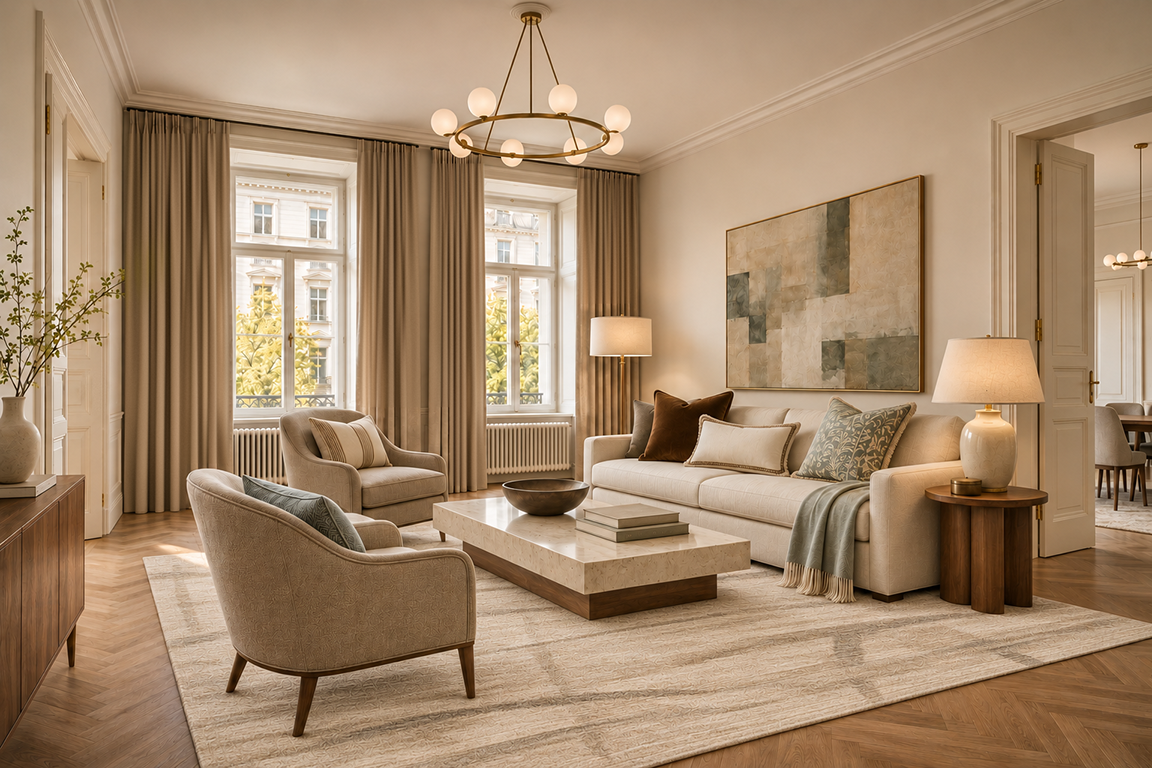
Between Museum and Furniture Catalog
A Viennese period apartment is both a gift and a challenge. Stucco, folding doors, and herringbone parquet set the tone before the first piece of furniture is even placed. Those who decorate here often end up in one of two extremes: the apartment either feels like a museum, or it looks like a new build that got the address wrong.
The path in between is the interesting one. Classic substance and elegant modern furnishings reinforce each other when you follow a few rules. This article shows you which ones.
What the Viennese Period Apartment Offers
The typical Gründerzeit-era building has qualities that can hardly be built today: room heights often exceeding ten feet, ornate stucco ceilings, folding doors, box-type windows, and parquet in herringbone or panel patterns. Added to this are rooms lined up in a row, opening up long visual axes.
These elements are the true luxury of the apartment. Every interior design decision should be measured by whether it highlights the original substance or competes with it.
The Basic Principle: The shell remains classic, the content becomes modern and elegant
The architecture provides the history. Therefore, the furnishings can be quieter, clearer, and more contemporary than one might initially think.
| Preserve the Classic | Complement with Modernity |
|---|---|
| Stucco, rosettes, moldings | Sofas and armchairs with clean lines |
| Folding doors and vintage hardware | Contemporary lighting |
| Herringbone and panel parquet | Large-format art and photography |
| Box-type windows and shutters | Simple, floor-length curtains |
| Individual heirlooms and antiques | Minimalist storage furniture |
Five Rules for a Successful Mix of Styles
1. Give the architecture a quiet stage
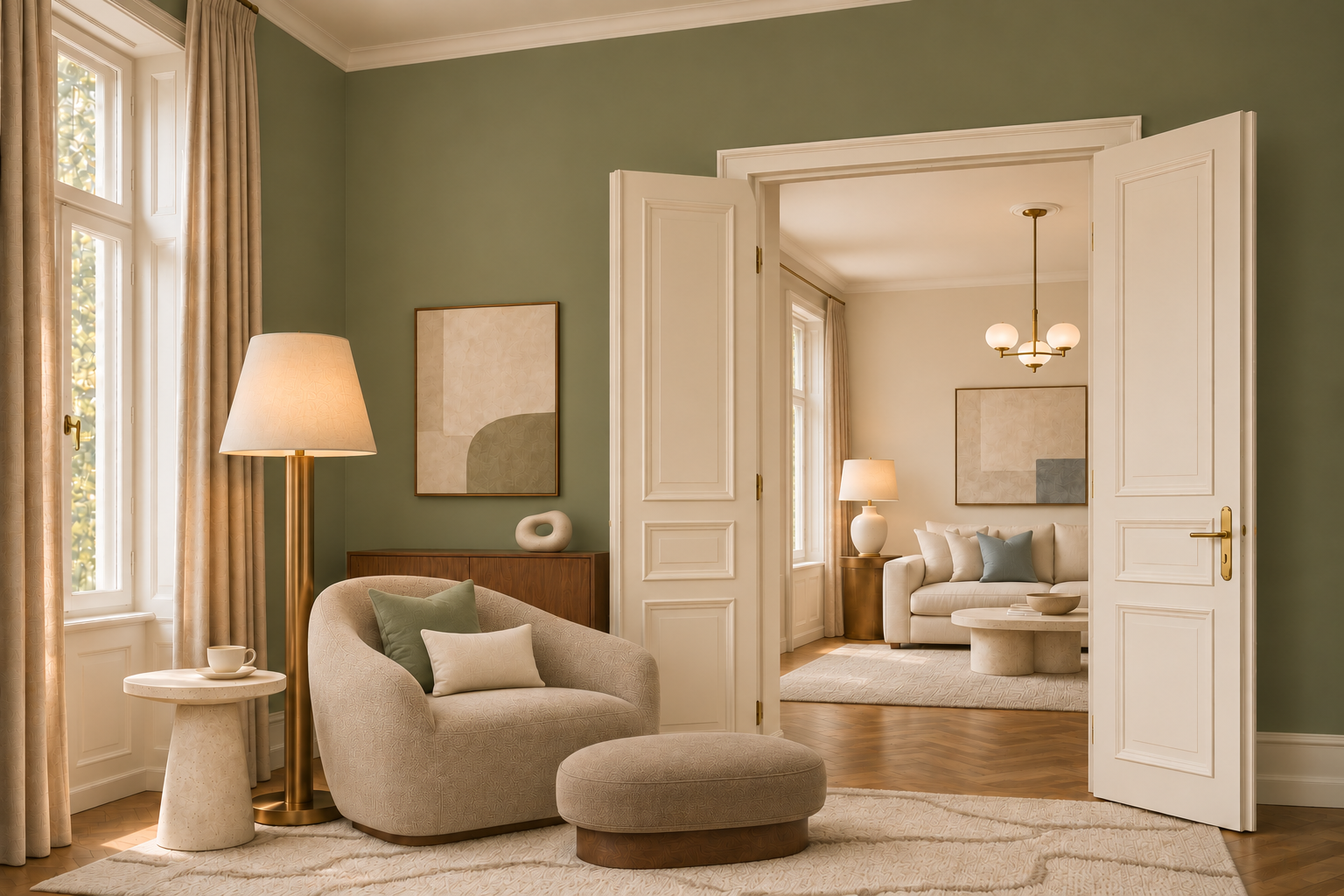
Stucco and doors are most effective against restrained wall colors. Off-white, warm cream and greige tones, sage green, or dove blue allow profiles to stand out three-dimensionally. Pure white can quickly feel cold in high-ceilinged rooms. Use a bold color purposefully in one room, such as the dining room or the library.
2. Think in the proportions of the room
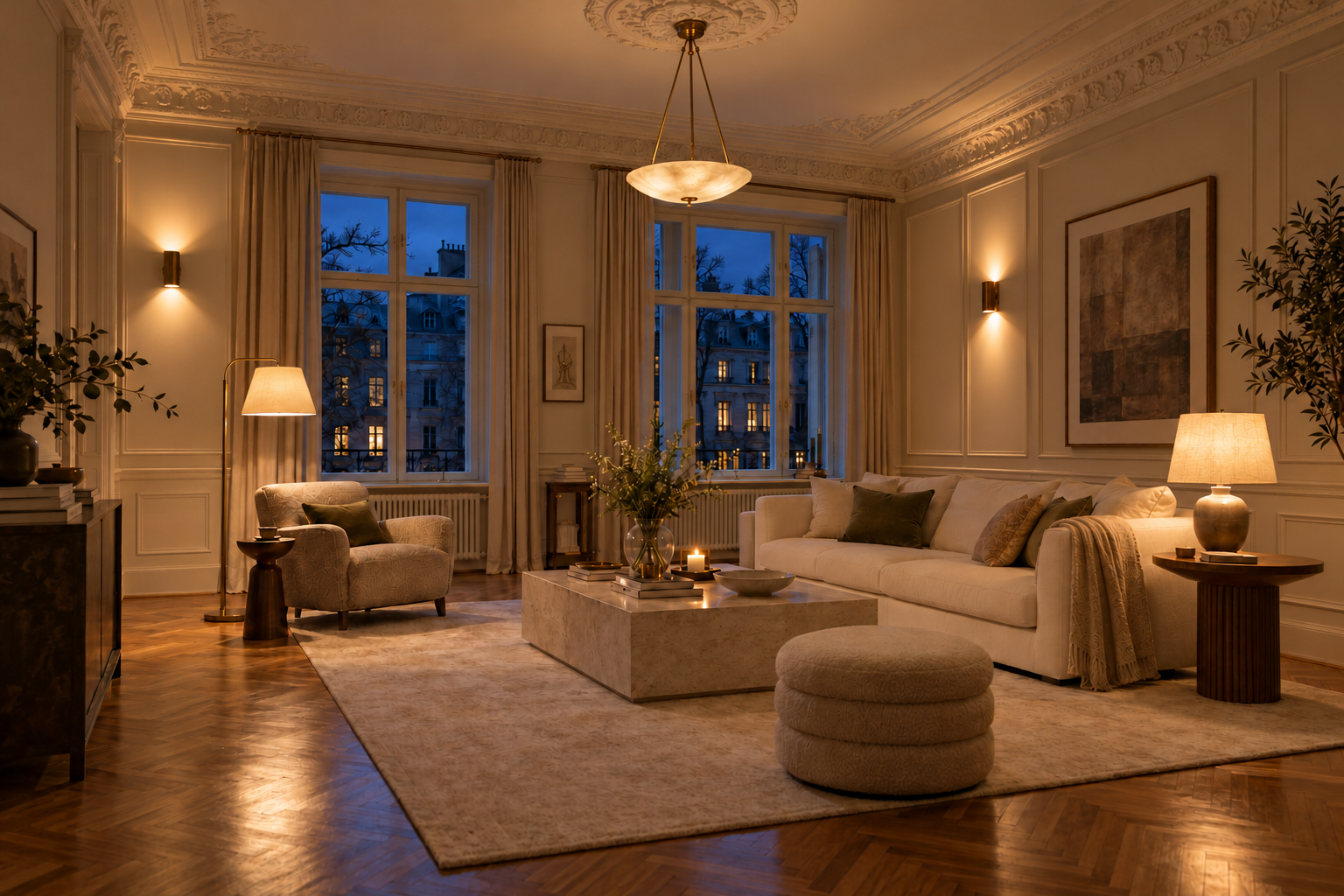
High ceilings demand scale. A dainty sofa and a small rug get lost under a 10-foot ceiling. Choose generous furniture, a rug large enough to accommodate the entire seating area, and curtains that start just below the ceiling and reach the floor. Don’t hang art too high, even if the wall invites it: the human scale is the ultimate measure.
3. Use contrasts intentionally
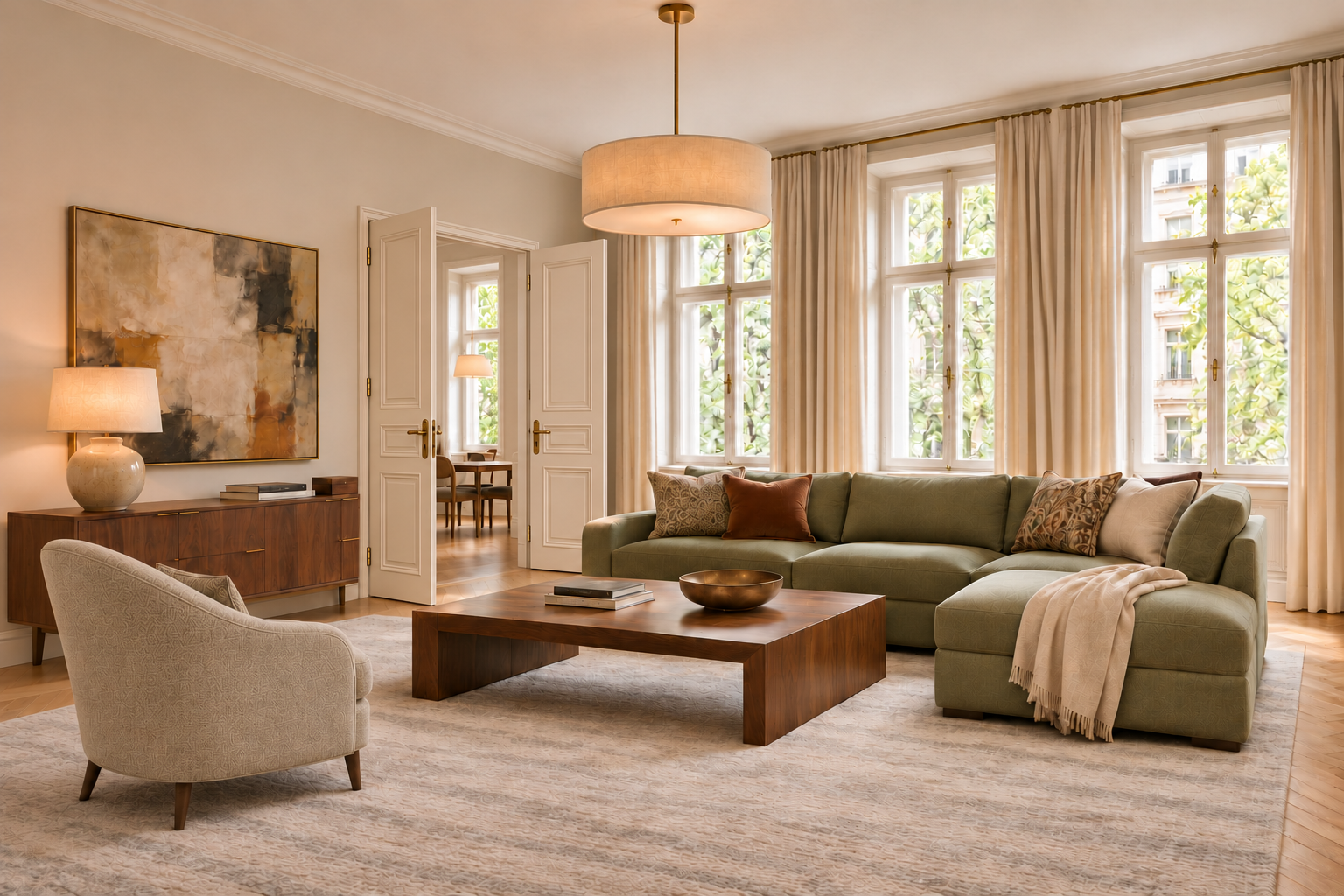
One modern statement per room is enough: a sculptural light fixture beneath a plaster rose, a sleek dining table between double doors, or a large-format abstract piece above a classic dresser. Contrast makes both sides stronger. If you scatter ten contrasts in the same room, it creates restlessness.
4. Connect styles through materials
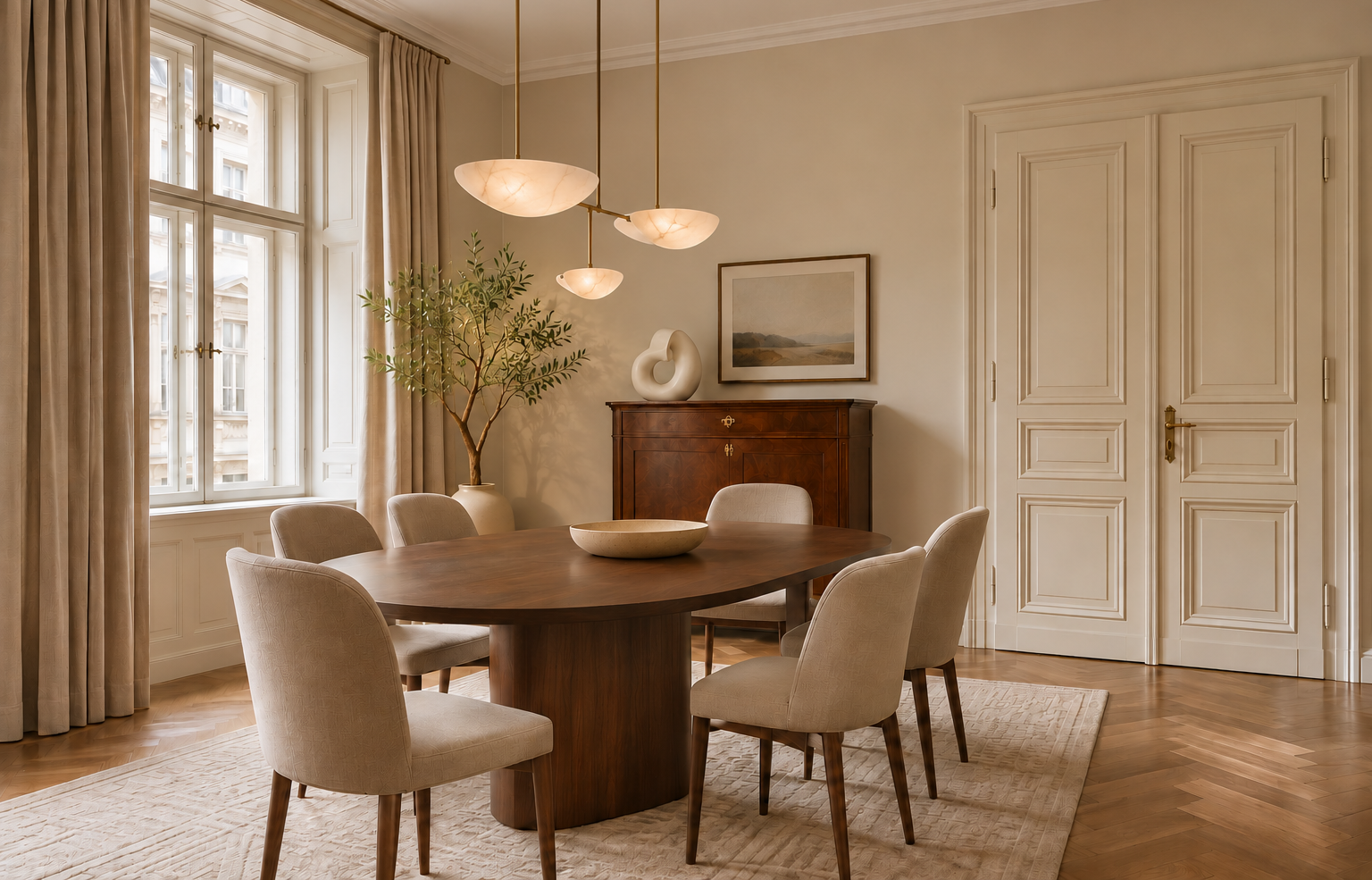
Old and new need something in common. This is achieved through repeating materials: brass on the lamp and the door hardware, natural stone on the console table and the mantelpiece, and velvet, linen, and wool for textiles. Limit yourself to three or four materials and carry them through all the rooms.
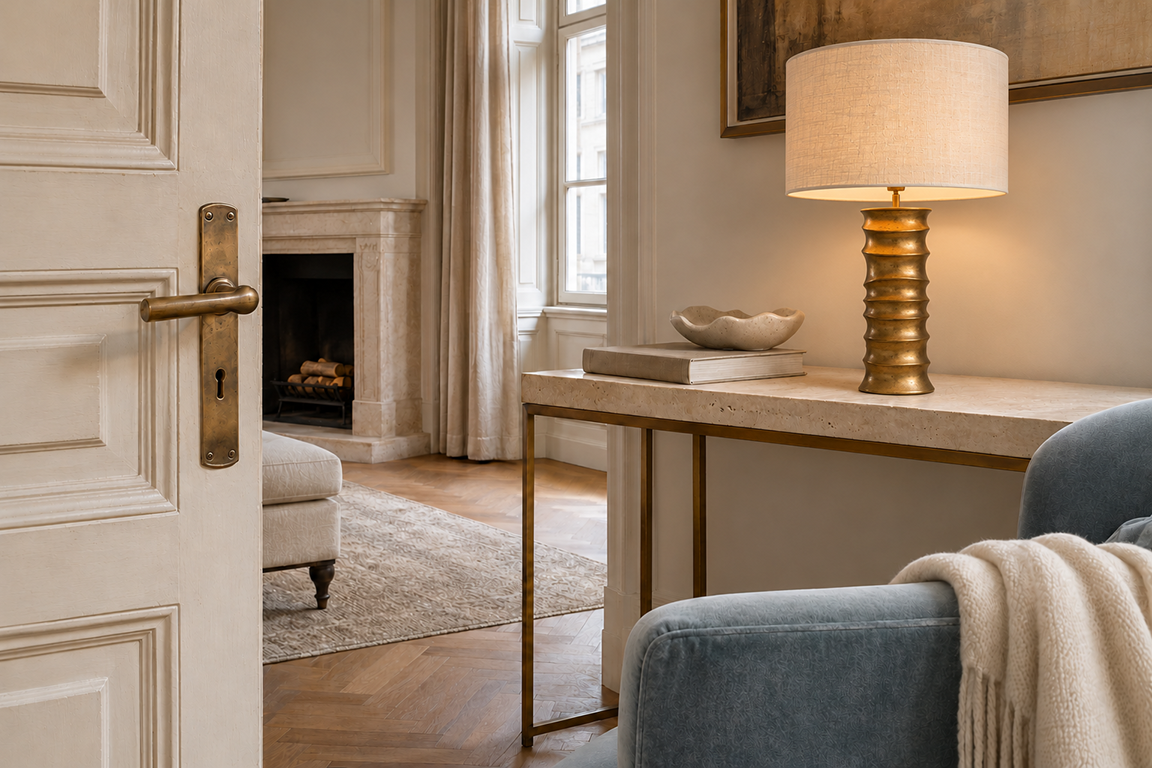
5. Plan lighting in layers
The ceiling outlet in the center of the room is a given in period apartments, but it isn’t enough on its own. Combine the pendant light with floor, table, and wall lamps at different heights. This makes the high room feel cozy in the evening and gives the crown molding depth.
Common Mistakes in Period Apartments
- Furniture that is too small: Furniture from a previous apartment often looks lost in high-ceilinged rooms.
- Everything pushed against the wall: Large rooms can handle freestanding seating groups. They create zones and keep the parquet visible.
- The museum effect: Period furniture, heavy curtains, and crystal chandeliers in every room overwhelm the apartment.
- The new-build effect: Recessed spotlights, high-gloss fronts, and borderless minimalism strip the period apartment of its character.
- Too many styles at once: Two stylistic worlds create tension; five create a flea market.
Conclusion: The building sets the tone, you provide the signature
A successful mix of styles follows a simple sequence. First, highlight the original substance, then furnish generously and calmly, and finally, add a few modern accents. The result feels natural and timeless.
This exact connection is my signature: classic elegance with a modern accent. You can find insights into my work in the Gallery, and details on the process and packages under Services. If you would like to furnish or redesign your period apartment in Vienna, we can clarify what your spaces need in an Initial Consultation.